

You finally picked out the storage building you want. You measured the yard, picked a size, and narrowed down the style. Then the delivery coordinator asks one simple question: do you want it set on skids or on a gravel pad? For a lot of first-time buyers, that question stops them cold. Most people never think about what goes under a shed until the shed is already on its way. The foundation under utility sheds matters more than most buyers realize. It affects how level the building stays, how long the floor lasts, and how much maintenance you will be doing five or ten years down the road.
This guide walks through the two most common foundation choices for portable storage buildings. We will look at how each one works, what it costs, where it performs best, and where it falls short. The goal is to help you make a confident call before the delivery truck shows up.
Why the Foundation Under a Shed Matters
A storage building is only as stable as the ground it sits on. That sounds obvious, but it gets overlooked all the time.
When a shed sits on an uneven or soft surface, the frame starts to twist over time. Doors that swung freely on delivery day start to stick. Gaps open up between the walls and the floor. Moisture finds its way in. The floor joists, even pressure-treated ones, stay damp longer than they should.
None of that happens overnight. It happens slowly, over seasons, as the ground freezes, thaws, gets soaked, and dries out again. A good foundation keeps the building level, keeps the wood off wet ground, and lets air move underneath so moisture does not get trapped.
There is also the matter of what the building is holding. A shed storing a few hand tools and a bicycle asks a lot less of its foundation than one holding a riding mower, a four-wheeler, and stacked boxes of holiday gear. Weight matters. So does how often you walk in and out, and whether you are rolling heavy equipment across the threshold.
Option 1: Setting a Shed on Skids
Most portable storage buildings come from the factory built on skids. These are solid treated timbers, usually 4×6, that run the length of the building and act as the base. The floor joists sit across them. The whole shed is essentially a self-contained structure that can be picked up and moved.
How it works
When a shed is delivered, the crew sets it directly on the ground, or on a few concrete blocks, and walks away. There is no site prep required beyond clearing the area and making sure the ground is reasonably level.
Where it performs well
Skids are the default for a reason. They work well on most residential lots where the yard is already fairly flat and the soil drains okay. They are also the right call when you are not sure the shed will stay in the same spot forever. If you might move it to a different corner of the property, or take it with you when you move, skids make that possible.
The cost is hard to beat. Since the skids are part of the building, there is no extra foundation to build. For buyers working with a tight budget, that is a real advantage.
Where it falls short
Skids have limits. On soft or wet ground, they can slowly sink over time, especially at the corners where the weight concentrates. On a slope, the shed will settle unevenly unless the crew blocks it carefully, and even then, frost heave can shift things over a winter.
Skids also keep the shed close to the ground. That means less airflow underneath, which means the floor stays damper longer after a hard rain. In a humid climate like Alabama’s, that is worth thinking about.
Option 2: Building a Gravel Pad
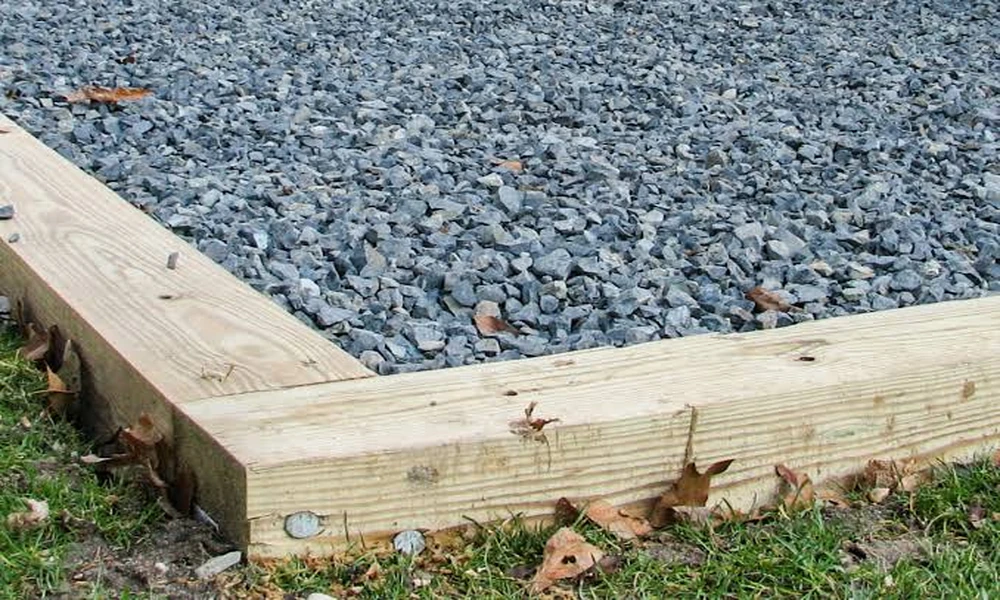
A gravel pad is exactly what it sounds like. You excavate the area, lay down a weed barrier, and fill it with crushed gravel, usually something compactable like #57 stone or crusher run. The shed then sits on top of the pad.
How it works
The pad spreads the weight of the shed across a wider area than skids alone. It also creates a flat, level surface that does not change much with the seasons. Water drains through it instead of pooling under the building.
Where it performs well
A gravel pad is the better choice when the ground is soft, uneven, or prone to holding water. It is also a good call for larger or heavier buildings, and for any shed that will hold real weight. A riding mower, a side-by-side, or stacked firewood all push down on the floor. A pad takes that load and spreads it out.
Gravel also lifts the shed a few inches above the surrounding grade. That small lift keeps the floor drier and lets air move underneath. In a wet climate, that airflow is what keeps the wood from staying damp.
Where it falls short
A gravel pad costs more. You are paying for the stone, the delivery, and either the labor to build it or the rental equipment to do it yourself. It also takes time. You cannot order a shed on Monday and have it sitting on a gravel pad by Friday unless the pad is already in place.
A pad is also permanent, or close to it. If you decide six months from now that you want the shed across the yard, the pad does not move with it. You are either building a new one or living with the spot you chose.
Comparing the Two Side by Side
A few questions tend to settle the debate for most buyers.
How flat is your yard? If the spot you have in mind is already level and firm, skids will likely serve you fine. If it is sloped, soft, or holds water after a rain, a gravel pad is worth the extra cost.
How heavy is what you are storing? Light loads do not stress a floor much. Heavy loads do. A pad spreads that weight out and protects the floor over the long haul.
How long will the shed stay there? If you might move it, skids are the flexible choice. If this shed is going to sit in one spot for the next twenty years, a pad is the better long-term foundation.
What is your budget? Skids come with the building. A pad is an added cost. For some buyers, that cost is the deciding factor, and that is a fair way to make the call. Just go in knowing what you are trading for the savings.
A Few Mistakes to Avoid
Whatever you choose, a few common mistakes trip up buyers.
Picking the lowest spot in the yard is one. Water runs downhill. If the shed sits in a dip, every rain sends water underneath it. Neither skids nor a gravel pad can fix bad drainage.
Skipping the leveling step is another. A shed that is a couple of inches out of level on delivery day will only get worse as it settles. Doors stick, walls rack, and the floor feels off every time you walk in. Get it level on day one.
Building a pad that is too small is a third. The pad should extend at least a foot past the shed on every side. A pad the exact size of the building gives water nowhere to drain and defeats part of the purpose.
Which One Should You Choose?
There is no single right answer. The right foundation depends on your yard, your budget, and what you are storing.
If your ground is flat and firm, and you want to keep costs down, skids are a reasonable choice. A lot of sheds spend their whole lives on skids with no problems.
If your ground is soft, wet, or uneven, or you are storing heavy equipment, a gravel pad is the better investment. It costs more up front, but it keeps the building level, keeps the floor dry, and cuts down on the maintenance you will do over the years.
The best move is to walk out to the spot you have in mind right after a hard rain. Look at how the water moves. Feel how firm the ground is under your boots. That ten-minute walk will tell you more about which foundation you need than any article can.
A Final Note on Site Prep
Whatever foundation you choose, the ground underneath it has to be ready. That means clearing away debris, knocking down high spots, and filling in low ones. It means thinking about where the water goes when it rains, not just where the shed goes when it arrives.
A good shed on a bad foundation will give you trouble. A good foundation under any storage building buys you years of quiet, trouble-free use. Spend the time on the base, and the building on top of it will do its job for a long time.