

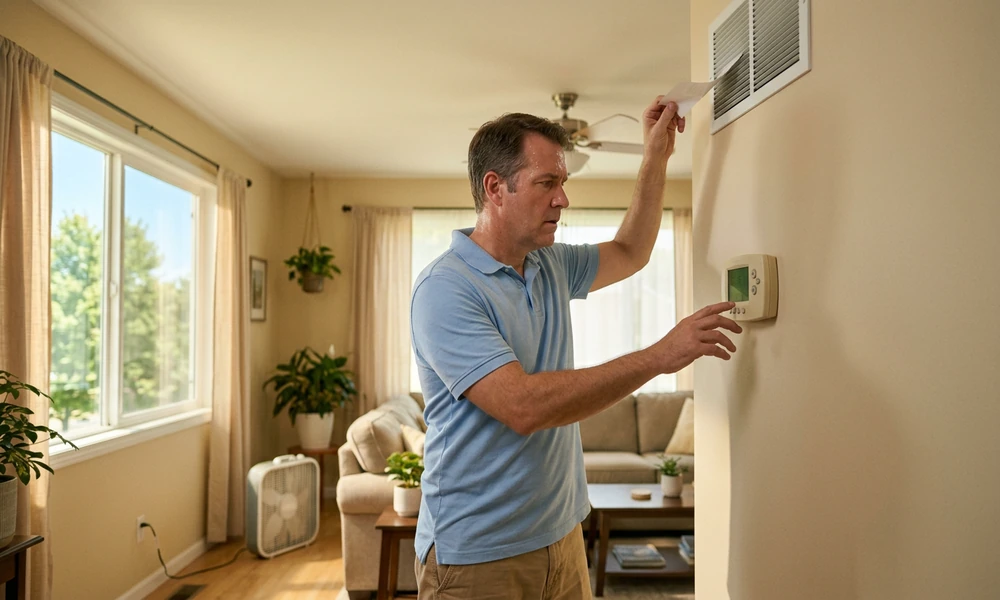
You can hear your air conditioner running, the thermostat says it’s cooling, yet your home still feels warm and uncomfortable. It’s a frustrating situation that many homeowners experience, especially during the hottest days of summer. While it’s tempting to assume the entire system has failed, weak airflow or poor cooling is often caused by issues that develop gradually over time. If your system continues to struggle, scheduling ac repair Washington, IN can help identify the problem before it leads to a complete breakdown.
The key is understanding what your air conditioner is trying to tell you. Sometimes the fix is simple, while other situations require professional attention. Here are some of the most common reasons your AC may be running without keeping your home cool.
1. Your Air Filter Is Clogged
A dirty air filter is one of the simplest yet most common causes of weak airflow. When the filter becomes packed with dust and debris, it restricts the amount of air moving through the system.
As airflow decreases, your AC has to work harder to cool your home, often resulting in longer run times and uneven temperatures. Replacing the filter regularly is an easy maintenance task that can improve both airflow and efficiency.
2. The Thermostat Isn’t Set Correctly
Before assuming something is wrong with your air conditioner, check the thermostat. It may sound obvious, but incorrect settings are more common than many homeowners realize.
Make sure it’s set to Cool, the fan isn’t set to On unnecessarily, and the temperature is lower than the current room temperature. If the thermostat isn’t communicating properly with the system, cooling performance can also be affected.
3. Dirty Evaporator or Condenser Coils
Your AC relies on clean coils to transfer heat efficiently. Over time, dirt and debris can accumulate on both the indoor evaporator coil and the outdoor condenser coil, reducing the system’s ability to remove heat.
When this happens, the air conditioner may continue running while producing very little cooling.
4. Blocked or Closed Air Vents
Walk through your home and check the supply vents in each room. Furniture, rugs, curtains, or even accidentally closed vents can restrict airflow and make certain rooms feel warmer than others.
Keeping vents open and unobstructed allows conditioned air to circulate properly throughout the house.
5. Low Refrigerant Levels
Refrigerant is essential for absorbing heat from inside your home. If levels become low due to a leak, your system may still run but won’t cool effectively.
Common signs include longer cooling cycles, ice forming on refrigerant lines, and air that feels only slightly cool instead of cold.
Because refrigerant handling requires specialized equipment, this issue should always be addressed by a qualified HVAC technician.
6. Leaky Ductwork
If your home uses central air, damaged or leaking ducts can allow cooled air to escape before it reaches your living spaces.
Instead of cooling your rooms, conditioned air may end up in the attic, crawlspace, or inside walls. Even a well-functioning air conditioner can’t maintain comfortable temperatures if much of the cooled air never reaches its destination.
7. The Outdoor Unit Needs Attention
Your outdoor condenser needs unrestricted airflow to release heat effectively. If it’s surrounded by leaves, grass clippings, dirt, or overgrown vegetation, cooling performance can suffer.
Keeping the area around the outdoor unit clean and maintaining adequate clearance helps your system operate more efficiently.
8. Your AC Is Too Small-or Too Old
Not every cooling problem is caused by a mechanical failure. If your air conditioner was incorrectly sized when installed, it may struggle to cool your home during periods of extreme heat.
Similarly, older systems naturally lose efficiency as components wear over time. Even with proper maintenance, aging equipment may no longer provide the same level of performance it once did.
9. Poor Insulation Is Letting Cool Air Escape
Sometimes the air conditioner isn’t the problem at all.
If your home has inadequate insulation or air leaks around windows and doors, cool air escapes while warm outdoor air enters. This forces your AC to run longer and work harder just to maintain a comfortable temperature.
Improving insulation can significantly reduce the workload on your cooling system.
10. Your System Needs Professional Maintenance
If you’ve ruled out the obvious causes and your home still isn’t cooling properly, routine maintenance may be overdue.
During a professional inspection, technicians can identify worn components, clean important system parts, check refrigerant levels, inspect electrical connections, and ensure everything is operating as efficiently as possible.
Many performance issues are discovered during routine maintenance long before they become expensive repairs.
When Should You Call for Help?
Some cooling problems can be solved with simple maintenance, but others require professional diagnosis.
It’s time to schedule an inspection if you notice:
- Weak airflow throughout the home.
- Warm air coming from the vents.
- Ice on the indoor or outdoor unit.
- Unusual noises during operation.
- Frequent cycling.
- Rising energy bills without explanation.
Addressing these warning signs early often prevents more extensive damage later.
Conclusion
If your air conditioner is running but your home still isn’t cooling, the problem isn’t always as serious as it first appears. Issues such as clogged filters, blocked vents, dirty coils, or thermostat settings can all affect your system’s performance, while refrigerant leaks, duct problems, or aging equipment may require professional repairs.
Paying attention to early warning signs and keeping up with routine maintenance can help your AC operate more efficiently and reduce the likelihood of unexpected breakdowns. When cooling problems persist, having your system inspected promptly is the best way to restore comfort, protect your equipment, and avoid more costly repairs in the future.