

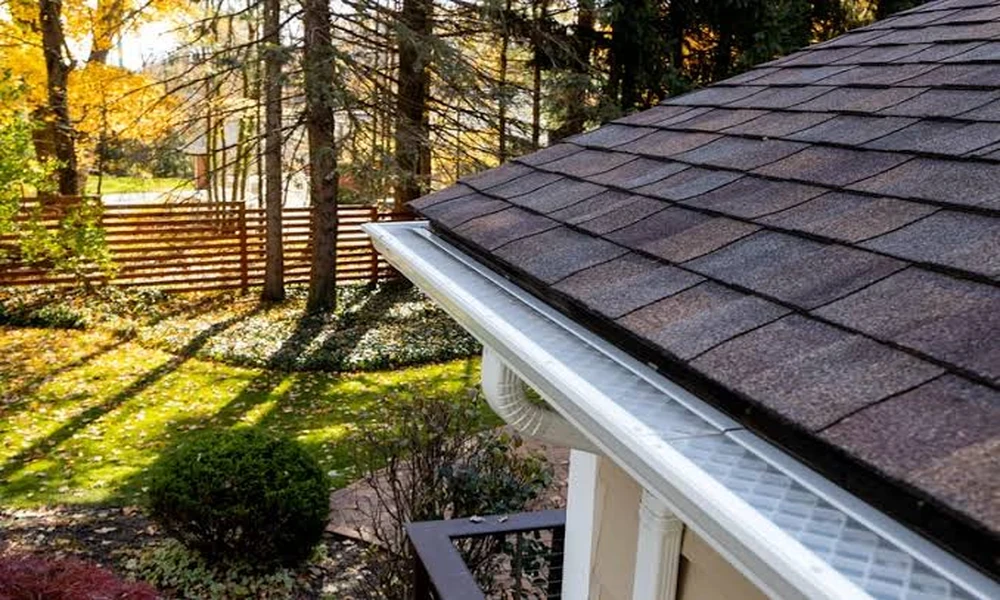
In northeast Wisconsin, the worst day of the year for a gutter usually isn’t the coldest one. It tends to come in late February or March. The sun finally has some warmth, the south side of the roof is dripping by noon, and the temperature drops below freezing again before dinner. The water that was running in the afternoon is ice by evening. Then it happens again the next day, and the day after that.
Plenty of homeowners only learn how their gutters behave in this cycle once a run starts sagging or a basement corner turns damp. Local exterior contractors such as Fantastic Services, a GAF certified roofer on Hoffman Road in Green Bay that also does siding and gutter installation and repair, look at gutters as the last part of the roof’s drainage system and not as trim added at the end. That’s a useful way to think about it. In this climate a gutter system fails like a chain, and the weak link is rarely where the water shows up.
The Water Hiding in a Snowbank
Snow looks light, but a roof that has held snow all winter is storing a surprising amount of water. Fresh powder may hold about an inch of water per foot of depth. The packed, settled snow that sits on a roof through January can hold three or four times that much.
One inch of water spread over 1,000 square feet of roof comes to roughly 620 gallons. A typical two story home has around 1,500 square feet of roof, so even a modest snowpack can send well over a thousand gallons toward the gutters during a few days of melting.
Summer storms are short. Melt water comes slowly but keeps coming, often for a week, and it often reaches a gutter still half full of ice from the night before. A system sized only for summer rain isn’t ready for that.
What Ice Does to Metal and Wood
Ice weighs about 57 pounds per cubic foot. A long stretch of 5 inch K style gutter packed solid can easily hold more than a hundred pounds. All of that weight hangs from fasteners in a single fascia board.
Older installations often used long spikes driven through the gutter every few feet. Each freeze and thaw loosens those spikes a little. After a few winters the gutter line starts to wave and sag, and the low spots hold even more water that freezes overnight. Hidden hangers screwed into the fascia hold much better, especially when they’re spaced 24 inches apart or closer under roofs that collect heavy snow.
The wood behind the gutter matters just as much. When melt water spills over the back edge, or runs behind a gutter installed without a drip edge or gutter apron, it soaks the fascia and the edge of the roof deck. That rot spreads unseen until a hanger pulls loose during an ice storm.
Seams are the third weak point. Sectional gutters have a sealed joint every ten feet or so, and ice expanding inside those joints slowly pries them open. Seamless aluminum is formed on site in one continuous length, so the only joints left to check are the corners and end caps.
Pitch, Size and the Downspout Bottleneck
A gutter needs a slight slope to move water, usually about a quarter inch for every ten feet of run. If it’s too flat, water sits in the trough and freezes in place. On runs longer than about 40 feet, installers often slope the gutter from the middle toward a downspout at each end, so water doesn’t have to travel the full length while it’s freezing.
Downspouts are where most melt systems choke. A standard 2 by 3 inch downspout can freeze shut with a fairly small plug of ice. A 3 by 4 inch downspout carries roughly twice as much water and takes much longer to close completely. In snow country, many installers pair 6 inch gutters with the larger downspouts. That matters most under steep roof planes, or where a valley sends concentrated water to one corner of the house.
Where the Water Goes Next
Getting water off the roof is only half the job. Frozen ground absorbs almost nothing. Downspout extensions get buried under drifts or knocked loose by a snow shovel, and the melt water collects right against the foundation. It refreezes at night and then finds the smallest crack in the basement wall on the next warm afternoon. Much of the Fox River valley sits on heavy clay that drains slowly, which makes this worse.
Extensions should run at least six feet from basement walls wherever the yard allows. They should also point away from driveways and walkways, where runoff refreezes into slick patches. The Milwaukee Metropolitan Sewerage District’s gutter and downspout guidance gives similar winter advice: clear snow away from discharge points, put extensions back on, and make sure melt water has an open path once the ice in the gutters starts to let go.
A Walk Around the House After the Melt
The best time to check gutters is right after the snow is gone, while winter’s damage is still easy to see. A slow loop around the house covers most of it.
- Stand back from each side of the house and look along the gutter line for dips or waves.
- Look for dark streaks or mineral stains on the siding below corners and seams.
- Check the fascia for peeling paint, swollen wood or soft spots.
- Look for narrow trenches worn into mulch or soil along the drip line, which mean the gutter overflowed.
- Check the basement corners closest to each downspout for damp concrete or efflorescence.
- Look at the downspout elbows for splits or bulges, a sign that ice expanded inside them.
Guards, Cables and Their Trade-Offs
Gutter guards help with the leaves that pile up in this region. Oaks can hold their leaves into November, and maples drop seeds every spring. In winter, though, some guards let a crust of snow and ice form across the top, so melt water slides right over the gutter. Micro mesh screens let water through in rain but can glaze over in freezing drizzle. Reverse curve designs rely on water clinging to a rounded lip, and ice breaks that flow. Some homeowners skip guards and schedule a cleaning in late November, after the last leaves fall.
Heat cables keep a channel open through the ice, but only if the cable runs the full path, along the eave, through the gutter and down the inside of the downspout. A cable that stops at the gutter just moves the frozen plug lower. Cables also use electricity all season and need a properly protected outdoor circuit.
The Trouble That Starts in the Attic
Ice dams aren’t really a gutter problem. They form when heat escaping from the living space melts snow on the upper roof, and the water refreezes over the cold eaves. A gutter full of ice makes a dam worse, but the fix is attic insulation, ventilation and an ice barrier membrane under the shingles near the edge. If a roof replacement is a few years away, it often makes sense to plan new gutters at the same time. That way the drip edge, gutter apron and fascia are handled together and not patched separately.
Repair or Start Over
A few loose hangers, a leaky end cap or one dented downspout are ordinary repairs. Replacing the system makes more sense when it’s sectional with many tired seams, when long stretches of fascia have gone soft, or when undersized gutters sag on more than one side of the house. Late summer and early fall are the easiest times for the work, before the first hard freeze locks everything up again.
The thaw arrives every year in Green Bay. A gutter system with enough size, slope, solid hangers and a clear route for water away from the house is what keeps that melt water out of the basement.