

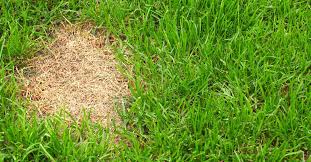
You’ve watered. You’ve mowed. You might have even thrown down some seed last fall. And yet, there they are again: ugly bare patches staring back at you from an otherwise decent lawn. If you’ve been searching for answers about lawn care in Newtown CT, you’re not alone. Bare spots are one of the most common complaints we hear from homeowners across Fairfield County, and the frustrating part is that there’s rarely just one cause.
The truth is, Newtown’s climate and soil conditions create a particular set of challenges that most generic lawn advice doesn’t account for. Let’s walk through what’s really going on beneath (and above) your turf.
Grub Damage: The Underground Problem You Can’t See
If your bare spots showed up in late summer or early fall and the dead turf peels back like a loose carpet, you’re almost certainly dealing with grubs. White grubs, the larval stage of Japanese beetles, European chafers, and other scarab beetles, feed on grass roots several inches below the soil surface. By the time you notice the damage topside, they’ve already been eating for weeks.
Newtown sits in a zone where Japanese beetle populations have been well established for years. The adults feed on ornamental plants through June and July, then lay eggs in your lawn. Those eggs hatch into grubs that feast on root systems from August into October.
Here’s what makes grub damage tricky to diagnose early: the lawn often looks fine through midsummer, even while the larvae are actively feeding. The grass simply can’t sustain itself once root mass drops below a critical threshold, and everything seems to collapse at once. You might also notice increased activity from skunks or raccoons digging up sections of your yard. They’re after the grubs, and their excavation makes the damage even worse.
A simple test: try pulling up a section of brown turf near the edge of a bare spot. If it lifts easily with no root resistance, cut a square foot of sod and count the grubs underneath. More than ten per square foot typically warrants treatment.
Fungal Disease Thrives in Connecticut’s Humid Summers
Newtown’s summers bring the kind of heat and humidity that cool-season grasses struggle with, and fungal pathogens love. The most common lawn diseases we see locally are brown patch (Rhizoctonia solani) and dollar spot (Clarireedia jacksonii), both of which produce distinctive patterns of dead or dying turf.
Brown patches tend to show up as large, irregular circles of wilted grass, often with a darker “smoke ring” border visible in the early morning when dew is still on the blades. Dollar spot creates smaller, silver-dollar-sized patches that can merge into larger dead areas if left unchecked.
What triggers these outbreaks? A combination of overnight temperatures above 65°F, prolonged leaf wetness, and stressed turf. Lawns that are watered late in the evening or have poor air circulation from surrounding trees and structures are especially vulnerable. Compacted soil and excessive thatch also trap moisture against the crown of the grass plant, which is exactly where these fungi attack.
One detail that often gets overlooked: nitrogen-deficient lawns are far more susceptible to dollar spot. A lawn that hasn’t been properly fertilized going into summer is essentially setting the table for fungal disease.
Mowing Height Matters More Than Most People Think
This one doesn’t get enough attention. Many Newtown homeowners cut their grass too short, especially during the summer months, thinking a close-cut lawn looks cleaner and more maintained. The opposite is true from a plant health standpoint.
Cool-season grasses like the Kentucky bluegrass, tall fescue, and perennial ryegrass blends common in Newtown lawns should be maintained at 3 to 3.5 inches during the growing season. When you scalp the lawn down to 2 inches or lower, you’re removing the leaf tissue the plant depends on for photosynthesis. The grass can’t produce enough energy to maintain its root system, and thin or bare areas develop rapidly, particularly in spots that get full afternoon sun.
Short mowing also exposes the soil surface to more sunlight, which accelerates moisture loss and gives weed seeds a better chance to germinate. Crabgrass, in particular, exploits thin turf and bare ground relentlessly. The connection between mowing too low and weed pressure is direct and well documented.
If you’ve noticed that the bare spots in your lawn tend to appear in the same sun-exposed areas year after year, your mowing height is worth reconsidering before you spend money on seed or sod.
The “One-Third Rule” in Practice
Never remove more than one-third of the grass blade in a single mowing. If your target height is 3.5 inches, mow before the grass reaches about 5 inches. This keeps the plant from going into shock and maintains a denser canopy that naturally crowds out weeds.
Soil pH Imbalance: Newtown’s Hidden Variable
Connecticut soils tend to be naturally acidic, and Newtown is no exception. Most lawn grasses perform best in a pH range of 6.2 to 7.0, but untested and unamended soils in this area frequently test below 5.5. At that level, essential nutrients like nitrogen, phosphorus, and potassium become chemically unavailable to the plant, even if they’re present in the soil. You could apply fertilizer all season and still see poor results if your pH is too low.
A soil test is the only way to know where you stand. The University of Connecticut’s Soil Nutrient Analysis Laboratory (soiltest.uconn.edu) offers affordable testing for homeowners and will provide specific lime and fertilizer recommendations based on your results. It’s one of the best investments you can make before spending anything else on your lawn.
Correcting pH with lime takes time. It’s not an overnight fix, and most lawns in the Newtown area need an application every one to two years to maintain optimal levels. The key is consistency.
Why Spot Fixes Don’t Last
Throwing seed on a bare patch might green things up temporarily, but if the underlying cause hasn’t been addressed, the same spot will fail again. Grubs will return if untreated. Fungal spores persist in the soil from year to year. Low pH doesn’t correct itself. And mowing habits tend to stay the same unless someone makes a conscious change.
This is exactly why Tick & Turf’s fertilization and weed control programs are built around a full-season approach to lawn care in Newtown CT rather than one-time fixes. The programs include properly timed fertilizer applications that keep your turf dense and disease-resistant, pre-emergent and post-emergent weed control calibrated to our local growing conditions, and soil amendments based on actual test results. Grub prevention is addressed proactively with targeted applications before larvae cause damage, not after.
The difference between a lawn that keeps developing bare spots and one that fills in and stays thick comes down to whether you’re treating symptoms or managing the whole system.
Take the Guesswork Out of It
If your Newtown lawn has been fighting the same bare spot battles season after season, there’s a reason, and it’s almost always fixable. Contact Tick & Turf for a lawn evaluation and let’s figure out what’s actually going on with your soil, your turf health, and your current maintenance routine. The right program, applied consistently, changes everything.